



I recently found myself looking for a new job. Like many professionals, the first place I went was LinkedIn.
The logic is obvious. LinkedIn presents itself as the central marketplace for modern careers: a place to discover companies, review job postings, identify recruiters, reconnect with former colleagues, and understand how people are positioning themselves professionally. For anyone entering the job market, it seems less like an optional tool and more like required infrastructure.
That is precisely what makes the experience so frustrating.
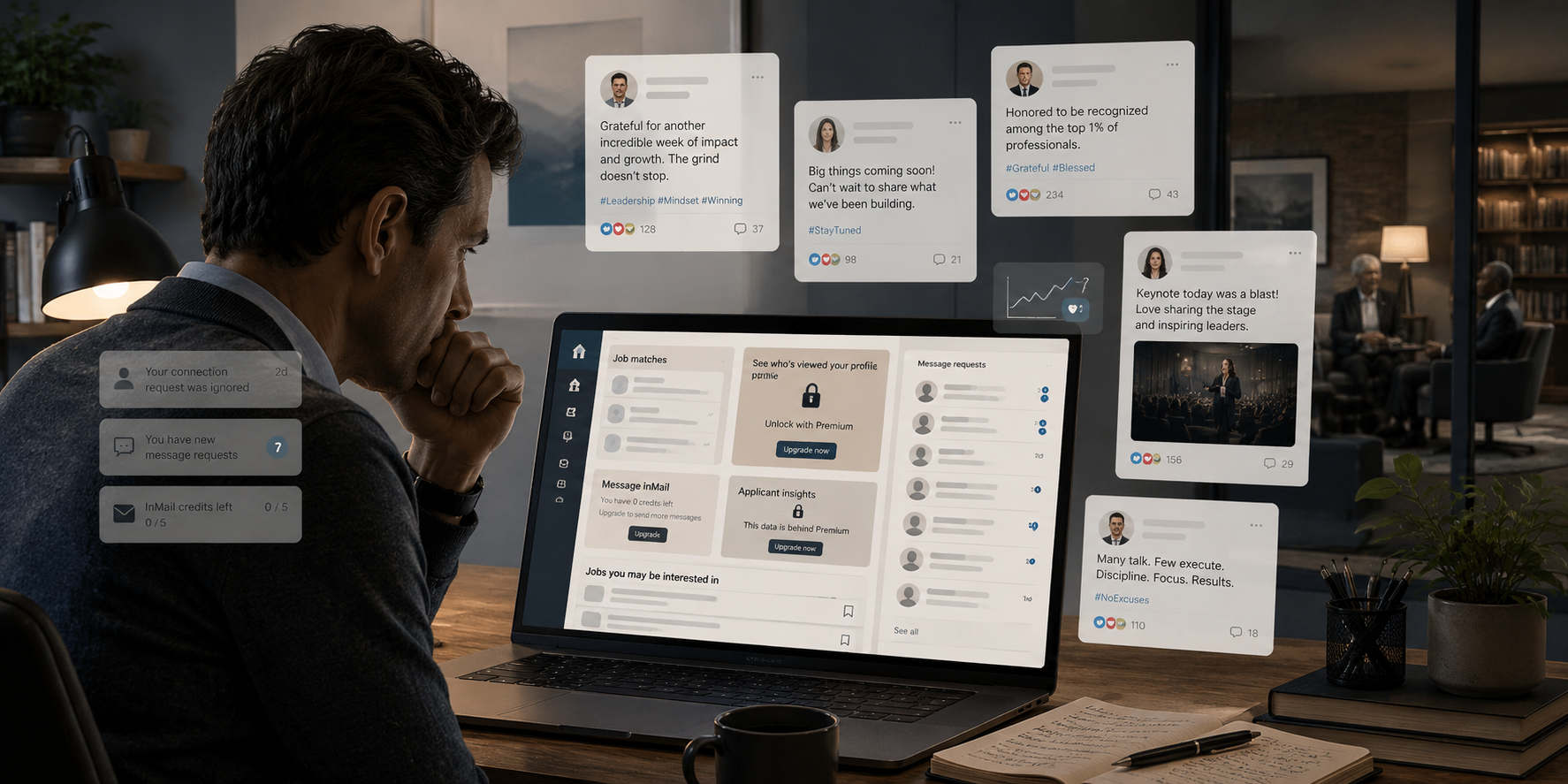
I began by searching for companies that interested me. I reviewed their job postings. I looked for recruiters or hiring contacts connected to the roles I wanted to pursue. But when I tried to contact them, I found that access was restricted behind a subscription paywall.
The pricing I was shown started at about $30 per month for the first year, with the second year requiring either a larger upfront payment or a higher monthly fee. For someone actively looking for work, that raises an uncomfortable question: is it reasonable to charge job seekers for access to the very people who may control their next opportunity?
I signed up for the trial because I wanted to test whether the paid features were actually useful. The answer, at least in my experience, was no.
The recruiter I wanted to contact was technically reachable, but only within tight limits. My trial account allowed me to message five people. If one of them responded, I could regain that message credit. But many people do not respond to LinkedIn messages. I understand why. I often do not respond to them myself. I have never been especially active on social media, and before this job search, I had not logged into LinkedIn in months, possibly a year.
Before reaching out to recruiters, I tried to be thoughtful. I researched the companies. I tailored each message. I used AI tools to refine the wording so the notes would be clear, relevant, and professional rather than generic or spam-like.
I received zero responses.
After five unanswered messages, my ability to contact people was gone. I could still browse job postings, but the feature that had pushed me toward the paid trial in the first place had effectively disappeared. The experience left me wondering whether LinkedIn is truly helping job seekers connect with opportunity, or whether it is monetizing their urgency.
But the paywall is only one part of the issue.
The other part is the culture LinkedIn has created around professional identity.
Scrolling through the platform, I found a constant stream of posts about career milestones, lessons learned, leadership insights, conferences, layoffs, company breakups, job openings, personal reflections, and public praise. Some of it is useful. Some of it is generous. Some people genuinely share knowledge that helps others.
But a great deal of it feels performative.
There is a kind of professional theater on LinkedIn where ambition, success, resilience, and wisdom are packaged into short posts designed to generate likes, comments, and visibility. People congratulate one another in formulaic language. They amplify vague career lessons. They turn ordinary workplace events into inspirational narratives. They post to remain visible, to signal relevance, and to reinforce status.
At a certain point, it stops feeling like professional networking and starts feeling like professional branding for its own sake.
That is not the same thing as professionalism.
Professionalism should be grounded in competence, integrity, communication, reliability, and meaningful contribution. It should not be measured by follower counts, engagement metrics, or the frequency with which someone posts polished reflections about their career journey.
What struck me most was the contrast between LinkedIn activity and actual professional respect. Some of the people I have admired most throughout my career — people in serious leadership roles, people who built teams, solved hard problems, made difficult decisions, and earned trust over time — often have minimal LinkedIn profiles, if they have one at all. They are not constantly posting. They are not advertising every event they attend. They are not converting every professional moment into content.
Perhaps they do not need to. Perhaps their reputations exist outside the platform. Perhaps their work speaks through the organizations they lead and the people they have influenced.
That raises another question: if the most credible professionals are often the least performative, why are so many others being encouraged to perform?
LinkedIn may still be useful. It can help people find roles, identify companies, and stay aware of market activity. It can support professional visibility, especially for people who are early in their careers, changing industries, building independent businesses, or trying to expand their networks.
But usefulness does not make it authoritative.
LinkedIn is not the authority on professional value. It is a platform. It rewards activity, visibility, and engagement. Those incentives do not always align with substance. In some cases, they may even distort it.
The modern job search is already difficult enough without placing meaningful access behind subscription tiers. Professionals should not have to pay simply to introduce themselves to recruiters. Nor should they feel pressured to participate in an endless cycle of self-promotion just to appear relevant.
I do not plan to continue paying for LinkedIn after my trial ends. I would rather build relationships through direct conversations, real work, and genuine professional trust.
The future of professional networking should be better than this. It should make opportunity more accessible, not more transactional. It should reward substance over performance. And it should remember that a career is not built by posting about professionalism.
It is built by practicing it.